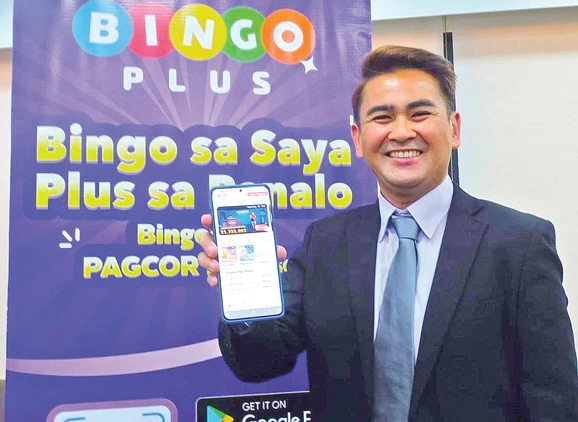
BingoPlus is convenient on mobile because account access, navigation, device support, and common account functions can be handled from a phone instead of requiring a desktop session. That matters in a market where mobile represented 50.13% of worldwide web traffic in August 2026, according to StatCounter. The official BingoPlus app center supports Android, iPhone, and iPad routes, while its account portal states that access is responsive across PC and mobile. Convenience depends less on screen size than on fewer navigation steps, readable controls, stable page loading, verified account access, and a layout that remains usable on cellular networks.
Mobile access starts with availability. StatCounter measured mobile devices at 50.13% of worldwide desktop-and-mobile web traffic in August 2026; when tablets are counted separately, mobile still represented 49.36%, desktop 49.11%, and tablets 1.54%. A service designed mainly around desktop use would therefore create unnecessary friction for a large part of normal web traffic.
BingoPlus addresses part of that issue through dedicated mobile routes. Its official App Center, reviewed in August 2026, lists guidance for Android, iOS, and iPadOS and identifies separate routes for Android devices and Apple devices rather than treating every phone as technically identical.
That separation matters because installation behavior differs between operating systems. The official iOS guide directs iPhone and iPad users toward an Apple App Store listing and identifies AB Leisure Exponent, Inc. as the developer users should verify before installation; it also notes that current compatibility requirements should be checked before downloading.
| Mobile-use detail | Practical effect |
|---|---|
| Android-specific route | Users can follow installation information intended for their operating system. |
| iPhone and iPad route | Apple users can reach the appropriate App Store path rather than an Android file. |
| Responsive account portal | The same account can be reached from a phone browser or PC. |
| Official-domain checks | Users have a clear reference point before entering account credentials. |
| Account recovery links | A login problem does not require creating another account. |
Once access is available, interface size becomes the next issue. WCAG 2.2, published as a W3C Recommendation in 2023, sets a Level AA minimum target-size criterion of 24 by 24 CSS pixels, subject to stated exceptions. Its enhanced Level AAA criterion uses 44 by 44 CSS pixels. Those measurements are useful references for mobile buttons because fingers are less precise than mouse pointers.
Small controls can turn a simple sign-in or menu selection into repeated taps. W3C specifically explains that adequate target size and spacing help users who have difficulty selecting small buttons positioned close together. A mobile interface benefits when login, account, support, and navigation controls have enough physical area to distinguish one selection from the next.
A convenient phone interface should not require zooming simply to select a normal account control. WCAG 2.2 provides a measurable reference: 24 × 24 CSS pixels at Level AA, while 44 × 44 CSS pixels is the enhanced Level AAA target.
Readable controls still need fast page response. Google’s Core Web Vitals use three field-performance measures: Largest Contentful Paint, Interaction to Next Paint, and Cumulative Layout Shift. Google recommends LCP within 2.5 seconds, INP at 200 milliseconds or less, and CLS at 0.1 or less, evaluated at the 75th percentile of page loads.
Those numbers explain why mobile convenience cannot be judged from appearance alone. A page may look clean in a screenshot but still feel slow if a large content block takes several seconds to appear, a tap waits too long for visual feedback, or buttons move while late-loading elements enter the page.
The 75th-percentile requirement is also important because average performance can hide poor sessions. A mobile service may perform well on fast Wi-Fi while behaving differently on cellular connections, older phones, or busy networks. Measuring a broad share of real sessions gives a more useful picture than testing one premium device under ideal conditions.
Navigation then determines how much effort remains after the page loads. On a desktop monitor, several panels can remain visible at once; a phone has room for far fewer elements. Mobile convenience improves when account access, support, and frequently used destinations are available without making users pass through several unrelated screens.
The official account portal reflects part of that approach by separating existing-member login from new-account registration. Its current page identifies member login, registration, access recovery, mobile account access, and app information as separate destinations. Keeping those tasks distinct reduces the chance of entering a registration route when the user only needs account access.
For returning users, the bingoplus login path is most useful when treated as an account-access task rather than a browsing task. Login pages contain sensitive fields, so fewer unrelated controls, clear field labels, visible recovery options, and predictable verification steps matter more than adding extra promotional material around the form.
Security adds another layer to convenience because a fast route is not useful if users cannot verify where they are entering credentials. The official BingoPlus account portal instructs users to check for the bingoplus.com domain and HTTPS and says passwords and one-time verification codes should not be shared through unofficial pages, messages, or third-party forms.
The official App Center gives similar advice. Its August 2026 material tells users not to share a password, PIN, or one-time code through an unofficial message and states that its installation routes do not send users to third-party APK mirrors. That type of source verification can reduce confusion when search results, copied pages, and unofficial download sources use similar brand wording.
A short mobile session also benefits from account recovery being close to the login flow. The official portal currently links password recovery, login-problem guidance, account verification information, mobile access, and app access from the same account-service area. A user who forgets a password can therefore follow a recovery route instead of starting another registration.
-
Login and registration are presented as separate tasks.
-
Password recovery is available from the account-support area.
-
Mobile access has its own guidance.
-
Verification codes are meant to remain private.
-
The official service is limited to eligible users aged 21 and above.
Age and account requirements are part of practical mobile design as well. BingoPlus states that its services are intended for eligible users aged 21 or older, and its official-access information reviewed on August 25, 2026 notes that eligibility and promotional terms may change. Showing restrictions near account access helps users check whether a service applies to them before spending time moving through registration screens.
Screen consistency becomes more noticeable after repeated use. People often switch between portrait and landscape views, browser tabs, messages, and other apps during a phone session. A stable menu structure reduces the need to relearn where account and support controls are located each time the user returns.
Visual stability can be measured rather than described only by preference. Google’s recommended CLS limit is 0.1, while the 2024-era Core Web Vitals framework replaced First Input Delay with INP as the responsiveness measure. An interface staying within those targets is less likely to suffer from delayed interaction feedback or disruptive layout movement during loading.
Data use also deserves attention on mobile. Users do not always connect through unlimited home broadband; cellular connections can vary by coverage, congestion, and device. Pages that prioritize account controls and text before large decorative assets are easier to use when bandwidth is limited, while unnecessary media can increase transfer size without helping someone complete a task.
That performance issue links back to interface structure. If the first usable screen presents the destinations needed for account access, recovery, or support, the user can begin sooner instead of waiting for every secondary element. Google’s 2.5-second LCP recommendation provides a useful benchmark for the point at which the main visible content should have appeared for a good field experience.
Browser access and installed-app access also serve different situations. A browser route avoids installation when someone only needs a short session, while an installed app can provide a dedicated entry point on a device used regularly. BingoPlus currently supports both approaches: its account portal describes responsive PC and mobile access, while the 2026 App Center provides Android and Apple installation routes.
Mobile convenience is measurable at several points: a 24 × 24 CSS-pixel minimum target under WCAG 2.2, a 2.5-second LCP target, a 200-millisecond INP target, and a CLS score no higher than 0.1 under Google’s current guidance. Those benchmarks cover tapping, loading, responsiveness, and page stability rather than relying on subjective descriptions such as “fast” or “mobile friendly.”
Support access becomes more important when a phone is the user’s only device at that moment. If verification fails, an installation route changes, or account recovery is required, leaving the mobile environment to search for help adds steps. The current BingoPlus account portal places troubleshooting and recovery material alongside its account-access routes, while the App Center includes installation and safety guidance.
Accessibility broadens the same issue beyond speed. WCAG 2.2 added criteria covering minimum target size and alternatives to dragging interactions, recognizing that some pointer movements can be difficult for people with motor limitations. A phone layout that uses ordinary taps for common functions and leaves sufficient spacing between controls can therefore serve a wider range of users.
Device diversity places a final technical requirement on the experience. The 2026 official BingoPlus material covers Android, iPhone, and iPad rather than assuming one screen size or operating system, and the iOS guidance notes that store availability and technical requirements can change. Responsive layouts need to preserve readable text, usable controls, and account access as screen dimensions and platform rules differ.
For users comparing browser and app access, the practical checks are measurable: whether important controls remain comfortably selectable, whether the main content appears near Google’s 2.5-second LCP guidance, whether interaction response stays near or below 200 milliseconds, whether pages avoid visible movement above a 0.1 CLS score, and whether the account route can be verified before credentials are entered.